
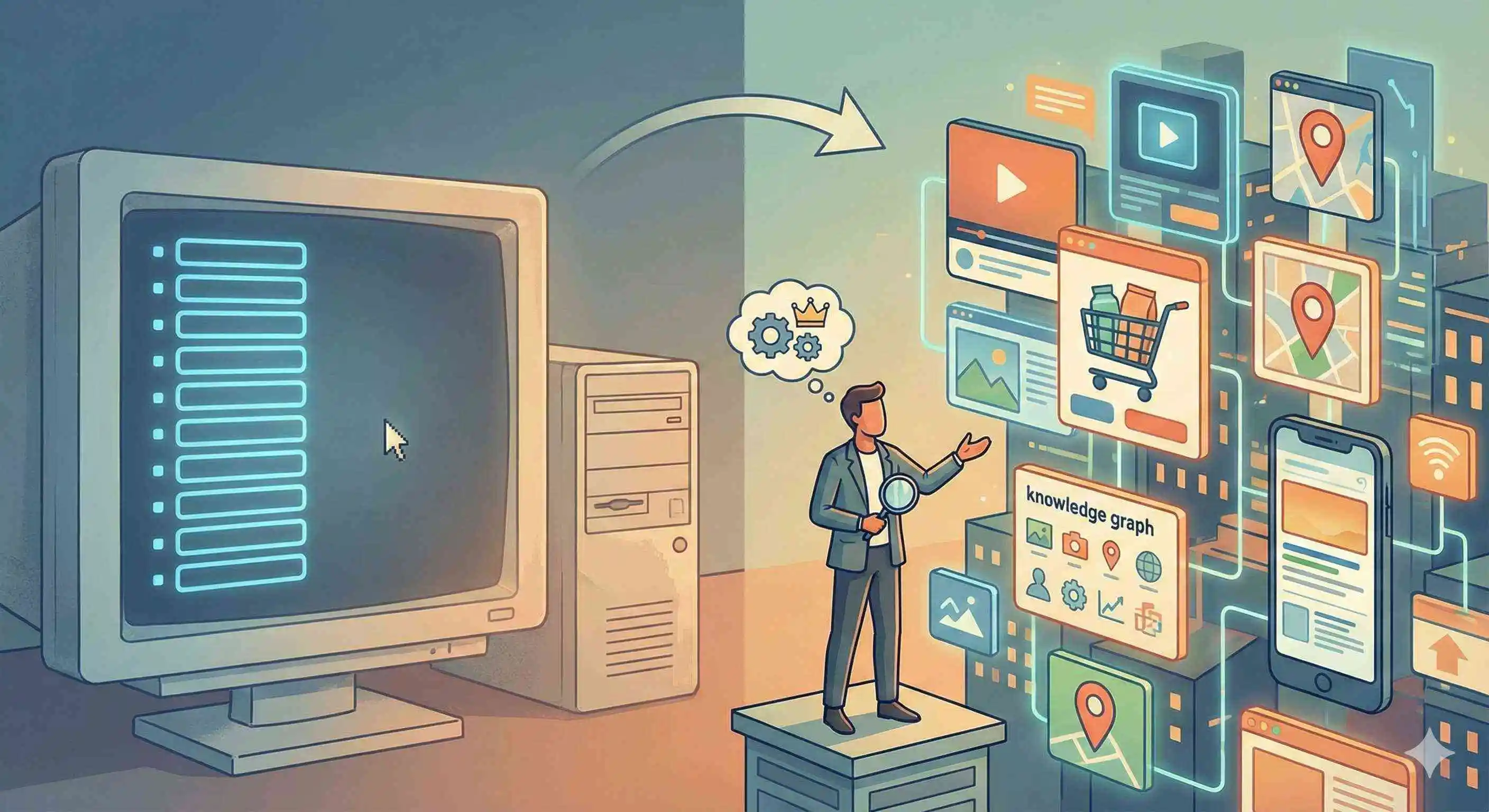
Visual SERPs in 2026: Rank in Featured Snippets & Image Pack
SERPs aren't just blue links anymore. Learn how to dominate featured snippets, image packs, and visual results to get more clicks in 2026.


If you’re still optimizing for the “10 blue links” of old Google, you’re fighting for a shrinking piece of the pie.
Today, a typical search results page is a dynamic, multi-format dashboard: featured snippets at the top, video carousels, local packs, “People Also Ask” accordions, and tweet embeds, all pushing organic links further down.
For an indie SaaS founder, this isn’t bad news. It’s an opportunity. These SERP features, often called “position zero” or “rich results”, can drive disproportionate traffic, establish instant authority, and capture high-intent users before they even click through to a website.
In this guide, I’ll break down the modern SERP landscape, show you which features matter most for SaaS, and give you a tactical playbook to appear in these coveted spots-so your organic visibility soars even if you’re not #1.
Why SERPs Changed (And Why It’s Good for You)
Google’s goal is simple: answer the user’s query as quickly as possible, on the search page itself. That means pulling out definitions, steps, comparisons, and visuals directly from websites and displaying them upfront.
For you, this means:
-
More ways to rank: Even if you’re not top in traditional rankings, you can appear in a featured snippet above all other results.
-
Higher CTR: Features like FAQs or how-to snippets grab attention and clicks.
-
Voice search dominance: Answers in featured snippets are often used for voice assistants.
-
Qualified traffic: Users who click from a rich result are further down the funnel, they know what you offer.
Let’s decode the SERP.
1. Featured Snippets (Position Zero)
What it is: A block at the top of Google that extracts and displays a direct answer from a webpage, along with the link.
Types:
-
Paragraph snippets: Definitions or brief explanations.
-
List snippets: Step-by-step or bulleted lists.
-
Table snippets: Data in table format.
How to Target It:
-
Identify snippet opportunities: Search your target keywords. If a snippet already exists, note the format and content length.
-
Structure your content clearly: Use a brief, direct answer right after the H2 that asks the question. Format lists with <ol> or <ul> tags.
-
Answer the query plainly: Write concisely (40–60 words for paragraph snippets). Use schema markup (more on this later) to help Google understand your content.
-
Aim for “how to,” “what is,” and “best ways to” queries: These often trigger snippets.
Example for a SaaS:
Query: “how to track project milestones”
Your blog post H2: “How to Track Project Milestones Effectively”
Immediately after: “Tracking project milestones involves 4 key steps: 1) Define milestones with clear outcomes, 2) Set deadlines and owners, 3) Use a visual dashboard, 4) Review weekly. Here’s how to do each…”
Google may pull that list right to the top.
2. “People Also Ask” (PAA) Boxes
What it is: A dynamic, expandable set of 4+ related questions. When clicked, each opens a snippet from a source, sometimes the same site multiple times.
Why it’s gold: Getting multiple PAA listings can dominate the SERP and show deep expertise.
How to Target It:
-
Research PAA questions: Use tools like AlsoAsked or manually click through PAA boxes for your keywords.
-
Create a dedicated FAQ section: On your landing page or blog post, answer each PAA question clearly under its own H2/H3.
-
Use schema markup (FAQPage or QAPage) to explicitly tell Google these are Q&As.
-
Write full, helpful answers (2–3 sentences minimum). Google prefers comprehensive responses.
3. Video Carousels & Thumbnails
What it is: A horizontal carousel of YouTube videos (sometimes from other platforms) appearing for tutorials, reviews, or explainer queries.
Why SaaS founders should care: Video builds trust quickly. Appearing here can drive high-engagement traffic.
How to Target It:
-
Create a dedicated YouTube channel for your product (even if just 3–4 videos).
-
Optimize video content:
-
Target keywords in title/description (e.g., “How to use [Your Tool] for [Task]”).
-
Add timestamps in descriptions.
-
Use clear, engaging thumbnails with text overlay.
-
-
Embed the video on a relevant page (like a blog post or feature guide) so Google can associate it with your site.
-
Encourage engagement: Ask viewers to like/comment, engagement signals matter.
4. Local Packs & Maps (Yes, Even for SaaS)
What it is: For location-based queries, a map with 3 business listings.
Relevance for SaaS: If you serve specific cities or offer in-person demos/consultations, this is vital. Also, “near me” searches for software services are growing (e.g., “CRM consultant near me”).
How to Target It:
-
Claim your Google Business Profile: Even if you’re remote, use your headquarters address.
-
Choose relevant categories: e.g., “Software company,” “Marketing consultant.”
-
Encourage reviews: More (positive) reviews improve local ranking.
-
Add photos and posts regularly to show activity.
5. Site Links & Sitelink Search Box
What it is: Additional links to internal pages that appear under your main listing in organic results (usually for brand queries).
Why it matters: They take up more SERP real estate, improve navigation for branded searches, and increase authority.
How to Encourage Them:
-
Clean site architecture: Use a logical hierarchy with clear internal linking.
-
Important pages linked from homepage: Contact, Pricing, Key Features, Login.
-
Use descriptive anchor text in your navigation.
-
No guarantee, but well-structured sites get them more often.
6. Knowledge Panels & Entity-Based Results
What it is: Sidebar info for brands, people, or concepts, pulled from Wikipedia, official sites, and Google’s Knowledge Graph.
How to Influence It:
-
Ensure your website is the official source: Use structured data (Organization schema) on your homepage.
-
Have a Wikipedia entry if notable (hard for new startups, but a long-term goal).
-
Active social profiles (LinkedIn, Twitter, etc.) that Google can pull from.
-
Consistent NAP (Name, Address, Phone) across the web.
7. Twitter Carousels & “Discussions and Forums”
What it is: For trending topics or newsy queries, Google may show recent tweets or forum threads (from Reddit, Quora, etc.).
How to Leverage It:
-
Be active on Twitter around your niche topics using relevant keywords.
-
Engage in forums like Reddit, Quora, or niche communities, quality contributions may get indexed and appear here.
-
Use hashtags strategically for discoverability.
8. Image Packs & Shopping Results
What it is: A row of images (or shopping ads) for product-related queries.
Relevant for SaaS: If you have a visual UI, infographics, or product diagrams, you can appear here.
How to Target It:
-
Optimize images: Descriptive filenames, alt text with keywords, compressed size.
-
Use image sitemaps.
-
For e-commerce SaaS: Consider Google Merchant Center integration if you sell merchandise or subscriptions with clear pricing.
Actionable SERP Feature Strategy: A 5-Step Playbook
Step 1: Reverse-Engineer Your Target SERPs
For each primary keyword, search in an incognito window and screenshot the results. Note every special feature (snippets, PAA, videos, etc.). This is your “SERP map” to conquer.
Step 2: Align Content with Intent and Format
-
Informational queries (“how to…”) → Target PAA and video.
-
Commercial queries (“best software for…”) → Target featured snippets and comparison tables.
-
Transactional queries (“sign up for…”) → Optimize for site links and rich results like “Product” schema.
Step 3: Structure for Machines and Humans
-
Use clear headers (H2, H3).
-
Answer questions concisely near the top.
-
Add schema markup (FAQ, HowTo, SoftwareApplication).
-
Embed videos and images with optimization.
Step 4: Monitor and Iterate
Use tools like Google Search Console (Performance report filters for “rich results”) and third-party trackers like Ahrefs to see where you appear.
If a page gets impressions but low clicks, you might be in a snippet but need a more enticing meta description.
Step 5: Scale with Intelligence
SERP landscapes shift. New features emerge. Instead of manual tracking every week, consider platforms that automate SERP analysis. For example, LLaMaRush monitors your keyword rankings and plan your weekly content, write it for you and even publish it to your CMS.
Final Thought: Own the SERP, Not Just a Link
Modern SEO isn’t just about ranking #1, it’s about claiming as much SERP real estate as possible. One query might pull traffic from a featured snippet, a video, and a PAA box, all from the same site. That’s dominance.
Start today:
- Pick one high-intent keyword for your SaaS.
- Analyze its SERP features.
- Optimize one page to target at least two of those features.
Iterate, track, and expand. Before long, you won’t just be in the search results, you’ll define them.
Founder-friendly takeaway: The SERP is now a mosaic. Your job is to place multiple pieces of your content into that mosaic, so searchers see you everywhere, trust you instantly, and click with purpose.
Thanks for reading! ❤️
Written by
SiddharthRead Next
Turn this into your AI Search strategy
LLaMaRush creates SEO, AEO, and GEO optimized content built to rank in Google and get cited by AI answer engines.
Start Ranking Everywhere