
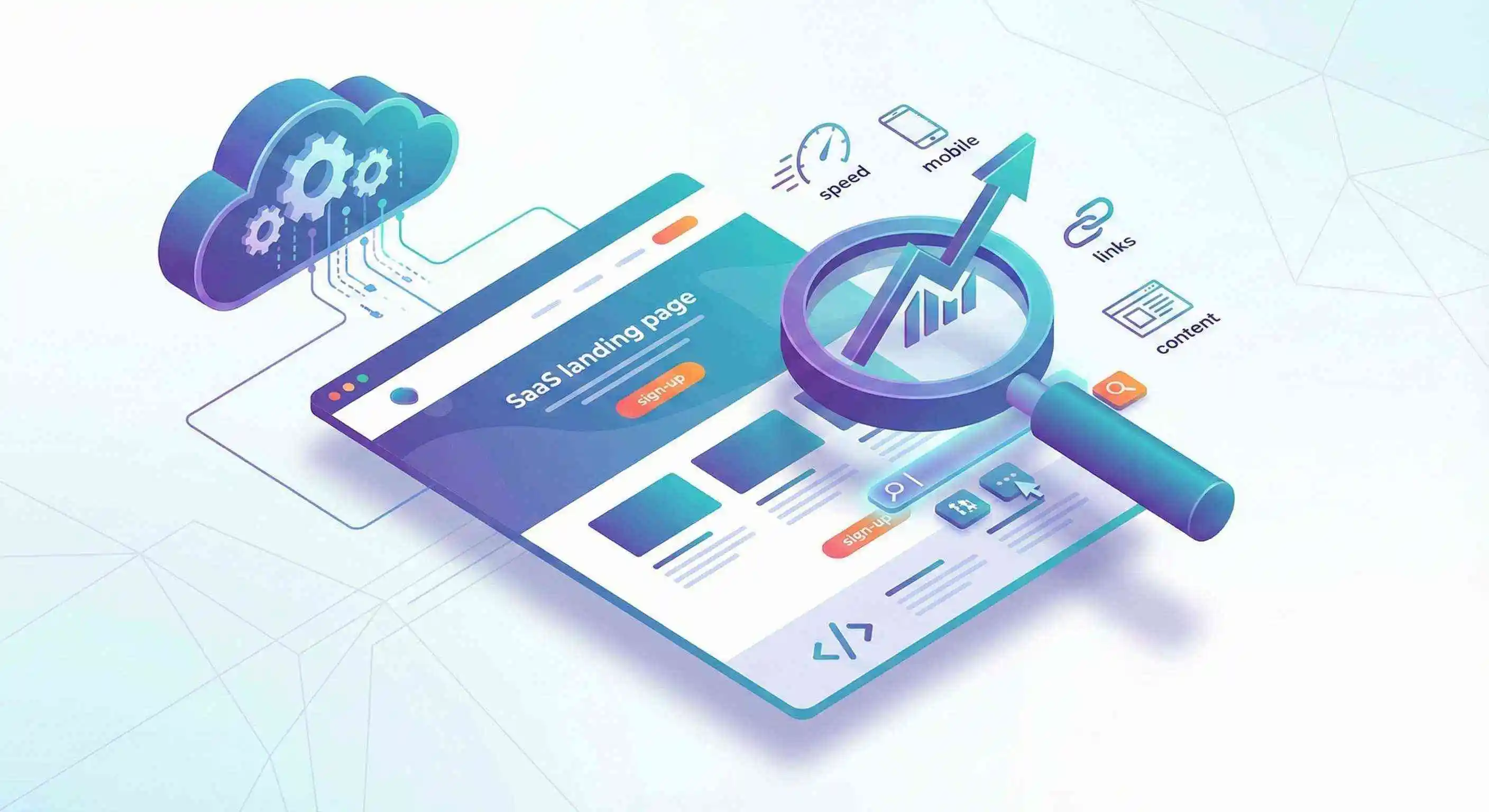
Landing Page SEO: Rank Your SaaS Pages & Get More Signups
Make your SaaS landing pages rank on Google. Complete guide to landing page SEO that drives organic signups without paid ads.


Every indie SaaS founder knows that building a great product is only half the battle, you also need people to find it. That’s where SEO comes in. Unlike paid ads that stop working once you stop funding them, SEO compounds over time. In other words, investing a little effort into optimizing your landing page can pay off with steady, 24/7 traffic without burning through your budget. Think of your optimized page as an “always-on” lead magnet that quietly does the selling while you sleep.
Just like arranging Scrabble tiles to spell a word, every piece of your landing page, from title tags to content, needs to fit perfectly for search engines. For indie SaaS, the goal is to attract the right traffic: people who need your solution. In practice, that means focusing on buyer-intent keywords and making your page fast, clear, and persuasive. This guide walks through the actionable steps: from choosing keywords to on-page tweaks to technical checks, so your landing page becomes a lead-generating machine.
1. Start with Keyword & SERP Research
Before writing a single line of copy, identify what your potential customers are searching for. Focus on high-intent, niche keywords, phrases that signal a user is ready to solve a problem with a tool like yours. For example, instead of just “time tracking software,” aim for long-tail phrases like “best time tracking software for freelancers.” These longer queries typically have less competition and attract visitors who are more likely to convert.
Tools like Google’s Keyword Planner, Ahrefs, or SEMrush can help you find such keywords. Don’t ignore the “people also ask” boxes or related searches on Google, they reveal real questions people are typing. You can also spy on competitors: search Google for your main keywords and click on top-ranking landing pages. See which terms they use in their titles, headers, and content. Note gaps you can fill with your own page. For example, if competitors aren’t mentioning a useful sub-feature or integration you have, you might target that as a keyword opportunity.
Once you have a list of target phrases (aim for 10–30 solid keywords to start), categorize them by intent. Transactional keywords include words like “best,” “compare,” or “signup” (e.g. “best CRM software for small business”), while informational keywords look like questions (e.g. “how to improve team collaboration”). Prioritize terms that match your offer, ideally transactional or solution-focused. These keywords will guide your landing page content and SEO elements.
Your keyword research is the compass for your page. Tools like LLaMaRush can even automate this step by analyzing your Search Console data and suggesting high-opportunity topics each week and writing relevant content for same. For example, LLaMaRush’s “weekly auto-calendar” feature can output 7 SEO-optimized article titles tailored to your niche every Monday and also create and publish content following plan everyday. Even something as simple as a Google search can inspire ideas for related queries. The key is to find questions and phrases your audience actually types, then use them to shape your page.
2. On-Page SEO Essentials
With target keywords in hand, optimize your landing page’s content and HTML so that Google understands what you offer. Small tweaks here cost nothing but can boost your visibility greatly.
-
Title Tags & Meta Descriptions: Your
-
Headers (H1, H2, H3): Structure your content with a single
<h1>and logical subheaders (<h2>/<h3>). The H1 should contain your main keyword and clearly state what you offer. For example: “SaaS Project Management Software for Efficient Team Collaboration”. Use H2/H3 tags for sections like “Features,” “Pricing,” or “How It Works.” This hierarchy helps both users and search bots scan your page. As the LLaMaRush guide notes, headings act as “signposts” that Google uses to understand your topic. -
Content & Copy: Write clear, benefit-oriented copy that speaks to pain points and outcomes. Avoid jargon; explain in plain language what problems you solve. For instance, say “Send invoices in minutes” instead of “Automated invoicing”. Use your keywords naturally in paragraphs and bullet points, but never force them. In fact, content quality is king: provide real value. Every sentence should aim to help the reader. As RapidRank reminds us, “Content is king... Focus on creating high-quality, value-driven content that addresses the pain points of your target audience”. Include social proof where possible, testimonials, case studies, trust badges, to build credibility and keep visitors engaged. Remember, Google rewards pages that satisfy user intent, so answer your visitors’ questions thoroughly.
-
URLs: Keep your page URL short and keyword-relevant (e.g. www.yoursite.com/team-collaboration-software). Avoid cryptic IDs or extra parameters, as a clean URL is more user-friendly and signals relevance. Once you set a good URL, avoid changing it unless absolutely needed; moving pages can lose SEO value.
-
Images & Alt Text: All images should be optimized too. Name image files descriptively (e.g. task-board-collaboration.png) and use alt text that includes relevant keywords. This helps search engines understand your visuals and can drive traffic through image search. However, compress images with tools like ToolsForImage to keep page load fast, large files are a common speed killer. LLaMaRush’s guide suggests simple graphics like screenshots or diagrams to break up text, as long as they have alt tags for SEO.
-
Schema Markup (Optional): If you have content like FAQs, pricing tables, or product details, consider adding schema markup (JSON-LD) so Google can show rich snippets. For example, an FAQ section can be marked up to appear directly in search results. This can improve click-through rates without extra effort. Schema is optional for a landing page, but tools and plugins can generate basic markup easily.
In summary, finesse your on-page elements: one great tip is to treat your title as the “Google elevator pitch” and use that keyword-rich focus throughout the page. These tweaks ensure visitors and bots instantly get the gist of your SaaS offering.
3. Technical SEO Check-up
Even the best content needs a solid technical foundation. Fast, crawlable pages rank better and keep users happy.
-
Mobile-First Design: Most users browse on phones, and Google now uses mobile-first indexing. Your landing page must be fully responsive and easy to use on any device. Test it on smartphones: buttons should be touch-friendly, fonts legible, and layout simple. If the mobile version is clunky, both Google and your visitors will drop off.
-
Page Speed: Site speed is a confirmed ranking factor and hugely important for user experience. Use tools like Google PageSpeed Insights or GTmetrix to audit your page. Common fixes: compress or lazy-load images, combine/minify CSS and JavaScript, leverage browser caching, and use a CDN for global delivery. The faster your page loads (aim for under 3 seconds), the lower your bounce rate and the happier Google will be.
-
HTTPS & Site Structure: Ensure your page uses HTTPS (SSL). Security is a trust signal and a minor ranking boost for Google. Also maintain a clean site architecture: link logically between pages so users (and crawlers) can navigate easily. For example, you might link from a blog post or feature-page back to this landing page. As DNEX notes, a logical internal linking structure “guides both users and crawlers”.
-
Structured Data (Schema): If applicable, add schema markup for products or FAQs. For instance, using the “Product” or “SoftwareApplication” schema can help highlight key info (pricing, ratings, etc.) in search results. While this is optional for many indie sites, a little schema markup can give you a rich snippet that stands out.
By ticking off this checklist, mobile optimization, speed tweaks, secure HTTPS, and clean internal links, you create an “invisible backbone” for your landing page that Google will love.
4. Conversion-Focused Content and UX
Good SEO isn’t just about traffic; it’s about converting that traffic once it arrives. An optimized landing page must guide visitors toward signing up or requesting a demo.
-
Clear CTAs: Make sure your call-to-action (e.g. “Start Free Trial” or “Book a Demo”) is impossible to miss. Place a primary CTA above the fold and repeat it at least once more lower on the page. The color and wording should stand out, and the button text should be action-oriented. Even if Google sends users to your page, a strong CTA is what turns clicks into signups.
-
Minimize Friction: Remove anything that might make users hesitate. Keep forms short (only ask for essential info), and avoid asking for a credit card upfront if you offer a free trial. Be transparent about pricing and features. Show social proof like client logos, testimonials, or security badges to build trust. For example, a “Trusted by [X companies]” section reassures visitors. The DNEX guide specifically mentions using security and privacy assurances as trust signals.
-
A/B Testing: Continuous improvement is key. Experiment with different headlines, CTAs, colors, or layouts to see what converts better. Even small text changes can double your signup rates. Track how changes affect SEO metrics too, for instance, a longer headline might lower bounce rate and raise dwell time. The idea is to keep iterating: test, measure, tweak, repeat.
Remember, a beautifully optimized page that no one signs up from is a missed opportunity. Align your SEO strategy with CRO: keyword research brings people in, but a slick UX and persuasive content (speaking to outcomes, not just features) makes them stay and convert.
5. Off-Page SEO & Link Building
As a lean startup, you might not have big marketing budgets, but you can still build authority gradually. A few high-quality links or mentions can boost your landing page’s SEO power.
-
Guest Posting & PR: Writing guest articles on industry blogs or participating in SaaS round-ups can earn a backlink when you mention your product. Each relevant link counts. Even writing on smaller niche sites can help. “Guest posting, partnerships, and influencer collaborations can open doors to valuable link opportunities”. Think about relevant communities: maybe a startup blog or tech media outlet could feature your story.
-
Content as Link Bait: Maintain a companion blog or resource section. Publish helpful how-to guides, case studies, or original research relevant to your niche. This kind of “thought leadership” content naturally attracts links and shares. For example, if your SaaS has data on remote team productivity, a public report could earn mentions and backlinks. Each blog post should subtly point back to your landing page where it makes sense (e.g. “For those ready to try a solution, check out our Free Trial”).
-
Community Engagement: Be active on forums like Indie Hackers, Reddit (e.g. r/SaaS or r/Startups), or specialized Slack/Discord groups. Answer questions genuinely and share insights, if it fits naturally, link back to your landing page as a resource. Over time, these discussions can drive referral traffic and even indirect SEO benefit. Also list your SaaS on directories like Product Hunt or relevant software review sites. These generate traffic, and the directory links themselves add a bit of SEO juice.
Building a natural link profile is more valuable than any quick hack. The DNEX guide emphasizes earned links from industry blogs and tech publications as key to domain authority. As your traffic and reputation grow, you can reassess if heavier link-building strategies or even agencies make sense. But early on, focus on genuine value and relationships, they pay off in trust and SEO.
6. Tracking Performance and Iterating
SEO is not “set and forget.” Keep a close eye on how your landing page performs and adjust as you learn.
-
Key Metrics: Monitor organic traffic (is it growing?), keyword rankings (are you climbing on your target terms?), bounce rate and dwell time (are visitors engaging or leaving immediately?), and most importantly conversion rate (are those visitors becoming users?). Tools like Search Console are your foundation for this. In GSC, check which queries are showing your page and how many click-throughs they bring. In GA, look at the funnel from visit to signup.
-
SEO Tools: Supplement with specialized tools. Ahrefs, Moz, or SEMrush can show your backlink profile and track rankings over time. They also reveal which pages or keywords send you the most value. Even free tools like Ubersuggest or AnswerThePublic can uncover new keyword ideas. Tools like LLaMaRush helps translating data from GSC to simple plain english and provide actionable steps and automates most of part.
-
Iterate: Use the data. If a certain keyword is ranking well but not converting, update the content or CTA to better match user intent. If traffic is low, consider adding new related keywords or even building more content (e.g. a blog post linking back). DNEX reminds us that SEO is an ongoing journey, keep adjusting your strategy as Google’s algorithms and user needs change. Schedule periodic “SEO check-ups”: test page speed, fix any broken links, and refresh the content to keep it current.
-
Source: Analytics and metrics help guide SEO decisions. By treating SEO as a process, your landing page will slowly but surely climb higher in search results and convert more visitors.
7. Leveraging Tools and AI
You might be thinking, “All this SEO work is a lot for one person!” and you’d be right. Fortunately, there are tools to help streamline your workflow.
-
Google Search Console & Analytics: Connect these first. They give raw data on your site’s health and traffic at no cost.
-
Keyword/SEO Suites: Free versions of Ahrefs, SEMrush, or Moz can point out quick wins. LLaMaRush is another option, it’s an AI-powered SEO co-founder. For example, LLaMaRush can connect to your Search Console to auto-generate a weekly SEO plan, auto generate content as per context of your site, existing content and content clusters. Think of it as outsourcing some of the analysis so you can focus on building product. (You can also use ChatGPT to draft outlines or brainstorm long-tail keywords as a fast first draft.)
-
Sitemap & Technical Audits: Use a plugin or tool to automatically submit your sitemap to Google. Tools like Screaming Frog or free audits in Google Search Console can alert you to technical issues (broken links, 404s, etc.).
Remember: tools don’t replace strategy, but they multiply your effectiveness. Even with limited time, automating repetitive tasks (like tracking rank changes or scanning for internal linking opportunities) saves hours each week. LLaMaRush’s approach, for instance, is to handle the busywork so you get straight to action items.
Conclusion
For indie SaaS founders and solopreneurs, SEO is a long-term play with huge upside. By carefully selecting high-intent keywords, optimizing your landing page’s on-page elements, and ensuring a top-notch user experience, you turn your page into a “magnetic” lead-generation engine. Over time, this organic traffic compounds, unlike ads, it keeps delivering without continuous spend.
Every change you make, from using the right H1 tag to speeding up your images, stacks incremental gains that add up. As DNEX sums it up: “SEO for SaaS landing pages isn’t merely a checkbox… it’s a powerful lever that can propel your product from obscurity to prominence”.
So start small and be consistent. Even writing one new blog post a month to support your landing page, or tweaking one headline, can move the needle. Use the free tools at hand (and consider AI-assistants like LLaMaRush to lighten the load). With patience and persistence, your indie startup can enjoy the fruits of SEO, a steady flow of relevant visitors and, eventually, paying customers, all without a massive budget.
Frequently Asked Questions
Q1: What are the most important on‑page SEO elements for a SaaS landing page?
A1: The most critical on‑page elements for a SaaS landing page are: title tag (include primary keyword + value prop, 50–60 chars), meta description (compelling summary with keyword, ~150 chars), H1 heading (one clear, keyword‑rich headline describing your solution), H2/H3 subheadings (break down features, benefits, pricing), keyword‑optimized body copy (write for users first, naturally include long‑tail terms), clean URL (e.g., /project‑management‑software), image alt text (descriptive + keyword where relevant), and internal links (connect to related blog posts or feature pages). These elements help Google understand your page and improve click‑through rates.
Q2: How do I find high‑intent keywords that will actually convert visitors into SaaS signups?
A2: Focus on transactional and commercial intent keywords; phrases where users are comparing or ready to buy. Examples: “best CRM for startups”, “project management software pricing”, “vs [competitor]”, “free trial”, “demo request”. Use free methods: Google Autocomplete, “People Also Ask”, and related searches. Also analyze competitor landing pages, see which keywords they target in titles and headers. Prioritize long‑tail, niche phrases (e.g., “time tracking for remote design teams”) over broad head terms. Tools like Google Keyword Planner, Ubersuggest (free tier), or LLaMaRush (automates opportunity analysis) can help. Always map each keyword to a specific user need your SaaS solves.
Q3: Does page speed affect landing page SEO and conversions for SaaS?
A3: Yes, significantly. Page speed is a confirmed Google ranking factor, especially for mobile searches. A slow landing page (over 3 seconds) increases bounce rates, studies show a 1‑second delay can reduce conversions by up to 20%. For SaaS, where users expect a smooth experience, speed directly impacts trial signups and demo requests. Use free tools like Google PageSpeed Insights or GTmetrix to identify issues: compress images (Squoosh), enable browser caching, minify CSS/JS, and use a CDN (Cloudflare free plan). Aim for a load time under 2.5 seconds on mobile.
Q4: How can I get backlinks to my SaaS landing page without a big budget?
A4: Several zero‑cost or low‑cost tactics work:
(1) Guest posting on niche SaaS or startup blogs, offering a unique tutorial or case study.
(2) HARO (Help a Reporter Out) : respond to journalist queries; get a link when your insight is used.
(3) Create linkable assets : publish original data, a free tool, or a detailed industry guide from your landing page.
(4) List your SaaS on directories : Product Hunt, G2, Capterra, or niche startup directories (many free).
(5) Community engagement : answer questions on Reddit (r/SaaS, r/startups) or Indie Hackers with a helpful link to your page where relevant. Focus on earning a handful of quality, relevant backlinks rather than hundreds of spammy ones.
Q5: What’s the difference between optimizing a blog post and a SaaS landing page for SEO?
A5: A blog post targets informational keywords (e.g., “how to improve team productivity”) and aims to attract top‑of‑funnel traffic, educate readers, and build authority. Its SEO focuses on answering questions thoroughly, using headings, and internal linking. A SaaS landing page targets commercial/transactional keywords (e.g., “best team productivity software for remote teams”) and is designed to convert traffic into signups or demos. Its SEO must balance keyword optimization with conversion rate optimization (CRO), clear CTAs, social proof, minimal friction, and persuasive copy. While both need on‑page and technical SEO, landing pages also require UX elements like trust badges, pricing transparency, and A/B tested headlines to turn visitors into paying users.
Thanks for reading! ❤️
Written by
SiddharthRead Next

Solo Founder SEO: Grow Traffic with 5 Hours/Week (2026)

Zero-Budget SEO: Grow Traffic Without Spending Money (2026)

Dental SEO: Get 20+ New Patients Per Month in 2026

What is SEO? Complete Beginner's Guide for Founders (2026)
Zero-Budget SEO: Grow Traffic Without Spending Money (2026)
Turn this into your AI Search strategy
LLaMaRush creates SEO, AEO, and GEO optimized content built to rank in Google and get cited by AI answer engines.
Start Ranking Everywhere