

Life Insurance SEO: Turn Ready-to-Buy Searchers Into Clients
Get life insurance clients ready to buy. Learn how agents rank for high-intent keywords and convert families searching for protection. Real tactics that work.


A few years ago, life insurance agents relied on referrals, cold calls, and networking. Those channels still work. But something fundamental has shifted. When people decide to buy life insurance today, their first move is not calling an agent. It is opening Google.
The person typing "life insurance agent near me" is not researching what life insurance means. They have already decided they need coverage. They are looking for someone to call. If your name does not appear in that search result, you do not exist to them. You lose the sale before you ever had a chance to prove how good you are.
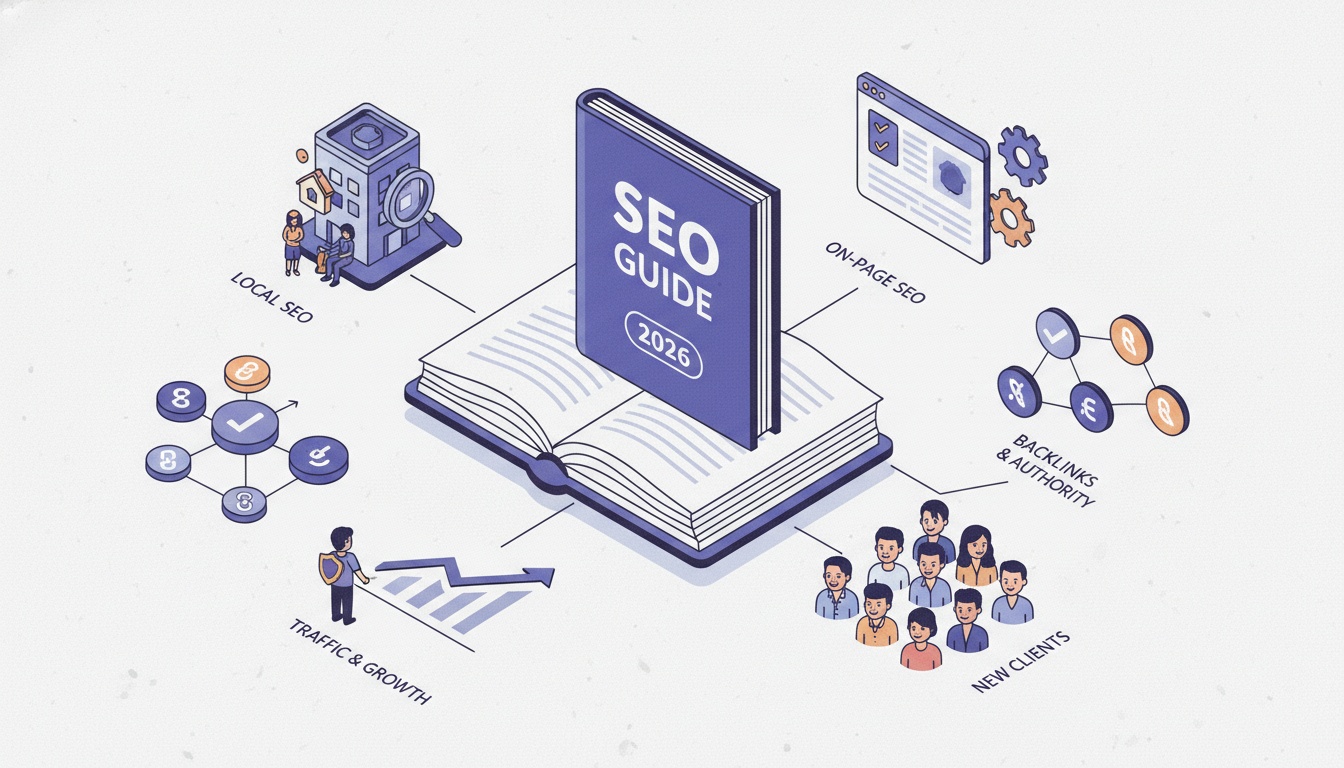 A step-by-step SEO playbook for insurance agents to attract local leads through search.
This guide shows you exactly how to capture those ready-to-buy searchers. No fluff. No generic advice. Just actionable steps based on what is actually working for independent agents in 2026.
Chapter 1: Why Life Insurance SEO Is Different Right Now
Here is what most agents do not realize. The life insurance market is changing fast, and the opportunity has never been bigger.
Demand Is Surging Across Key Age Groups
Overall life insurance application activity grew 9.5% in January 2026 compared to the previous year, marking the highest January growth on record. The first quarter of 2026 saw double-digit growth of 14.3%, reaching the highest total volume for any quarter on record.
The growth is not spread evenly. It is concentrated in specific age groups:
| Age Group | YOY Growth (January 2026) |
|---|---|
| Ages 0-29 | -7.5% |
| Ages 30-39 | +1.4% |
| Ages 40-49 | +10.6% |
| Ages 50-59 | +18.5% |
| Ages 60-69 | +23.9% |
| Ages 70+ | +38.6% |
The data comes from the MIB Life Index, which tracks actual insurance application activity through insurer underwriting systems. The pattern is unmistakable. Middle-aged and older consumers are actively seeking coverage right now. The youngest adults are not.
 A curated list of 200+ insurance keywords organized by type and buyer intent to help agents rank faster and attract ready-to-buy clients.
People Are Searching Differently Than Before
Research analyzing nearly 30,000 life insurance search terms shows that overall search demand for life insurance-related queries is up 83% from last year. The term "life insurance" alone now averages 301,000 searches each month, up from about 257,000 in 2024.
The way people search is also changing. Generic searches like "top 10 life insurance companies" have declined by almost 74% year-over-year on Google. People are no longer just browsing. They are coming to Google with specific needs, specific situations, and specific questions.
At the same time, searches for "affordable term life insurance" have increased 313%. Searches for "using life insurance to build wealth" have grown by over 1,100%. People are not just shopping. They are looking for solutions to real financial problems.
Term Life and Whole Life Are Both Growing
Application activity shows strong growth across both major product types. Year-over-year term life applications were up 26.4%, whole life increased 15.6%, and universal life grew 34.7%. Whether a client is looking for affordable pure protection or permanent coverage with cash value, they are searching for answers right now.
Term life remains the go-to for affordability and straightforward protection. Whole life continues to shine as a permanent, cash-value building solution for wealth and legacy planning.
Chapter 2: The Keywords That Bring Ready-to-Buy Clients
Most agents target the wrong keywords. They compete for broad terms like "life insurance" or "life insurance quotes." Those phrases get searched millions of times. They also attract every national carrier and every comparison website. You cannot win that fight.
Win where the giants do not compete. Target specific, long-tail keywords that match exactly what a ready-to-buy client is typing.
Term Life Keywords That Convert
The term life insurance category as a whole is up 13.5%, with the core search "term life insurance" growing over 54%. Focus on specific variations:
| Keyword Type | Example | Why It Works |
|---|---|---|
| Age-specific | "term life insurance for 40-year-old" | Targets a specific demographic ready to buy |
| Family-focused | "term life insurance for new parents" | Captures life-event driven intent |
| Price-conscious | "affordable term life insurance" | Up 313% in search demand, people are price shopping |
| Duration-specific | "10-year term life insurance" | Up 240% in search demand, people know exactly what they want |
Whole Life Keywords That Convert
| Keyword Type | Example | Why It Works |
|---|---|---|
| Cash value focus | "whole life insurance cash value explained" | Searcher wants to understand the investment component |
| Legacy planning | "whole life insurance for estate planning" | High-net-worth intent, longer sales cycle |
| Age-specific | "whole life insurance for seniors over 65" | Targets the fastest-growing applicant group |
| Comparison intent | "term vs whole life insurance for families" | Searcher is actively comparing options before buying |
Universal Life Keywords (Growing Fast)
Universal life-related terms are growing 12% year over year, with application activity for universal life up 34.7% in January 2026. This is an emerging opportunity most agents are ignoring.
| Keyword Type | Example |
|---|---|
| Investment-focused | "indexed universal life insurance for retirement" |
| Flexible premium | "universal life insurance flexible premiums explained" |
| Comparison | "universal life vs whole life which is better" |
Long-Tail Keywords for Life Events
Long-tail keywords like "best life insurance for parents" or "affordable health insurance for families" can be incredibly effective. They attract a more targeted audience and have a higher conversion rate because they match the searcher's intent more closely.
Focus on life-event triggers:
- "life insurance after having a baby"
- "life insurance for stay-at-home parents"
- "life insurance for small business owners"
- "life insurance after divorce"
- "life insurance for mortgage protection"
How to Validate Your Keyword Choices
Use these free tools to check search volume and competition before creating content:
| Tool | Best For |
|---|---|
| Google Keyword Planner | Finding monthly search volume and competition level |
| Google Search Console | Seeing what people already search to find your site |
| Ubersuggest | Getting keyword ideas and difficulty scores |
| AnswerThePublic | Finding question-based keywords (how, what, why) |
Start with Search Console. It tells you exactly what people typed before landing on your website. Those keywords are your fastest opportunities because you already rank for them, you just need to optimize further.
Chapter 3: Content That Answers Real Questions
Generic content does not rank for life insurance. Google applies its highest quality standards to financial content under its Your Money or Your Life framework. Expertise, authority, and trustworthiness signals are weighted more heavily here than in most other industries.
The Content Framework That Works
Effective life insurance content does three things:
- Answers a specific question a real person is asking
- Demonstrates your expertise through examples and clear explanations
- Builds trust through transparency and accuracy
Blog Topics That Actually Get Calls
Instead of writing "Why You Need Life Insurance," write these:
For young families:
- "How Much Life Insurance Does a 35-Year-Old Parent Actually Need?"
- "Term Life Insurance After Having a Baby: A Complete Guide"
- "Life Insurance for Stay-at-Home Parents: What You Need to Know"
For middle-aged buyers (the fastest-growing segment):
- "Life Insurance at 50: What Changes and What You Should Buy"
- "Term vs Whole Life Insurance for People Over 50"
- "Can You Get Life Insurance with High Blood Pressure or Diabetes?"
For seniors:
- "Life Insurance for Seniors Over 70: Your Options Explained"
- "Final Expense Insurance vs Whole Life: What's the Difference?"
- "How to Use Life Insurance for Long-Term Care Planning"
For wealth-building intent:
- "Using Life Insurance to Build Wealth: What Agents Don't Tell You"
- "Indexed Universal Life Insurance for Retirement: Pros and Cons"
- "Cash Value Life Insurance Explained in Plain English"
The E-E-A-T Checklist for Life Insurance Content
Google evaluates every piece of life insurance content against four criteria. Here is what you need to include:
| E-E-A-T Factor | What Google Looks For | How to Add It |
|---|---|---|
| Experience | First-hand knowledge, real examples | Include client scenarios and case studies (anonymized) |
| Expertise | Professional credentials, accurate information | Display your license number, certifications, years of experience |
| Authoritativeness | Recognition from other trusted sources | Include citations from carriers, industry data, and authoritative sources |
| Trustworthiness | Transparency, accuracy, compliance | Add clear disclaimers, avoid misleading claims, cite sources |
Insurance-related content must be accurate, compliant, and professionally presented. Thin or generic content does not rank well in this niche, and for good reason.
Where to Include Internal Links
Every piece of content you create should link back to your main service pages and your pillar page. This builds a content ecosystem that Google recognizes as authoritative.
- Link from your blog posts to your "Life Insurance" service page
- Link from your comparison content to your application or quote page
- Link from all life insurance content to your main insurance SEO pillar page
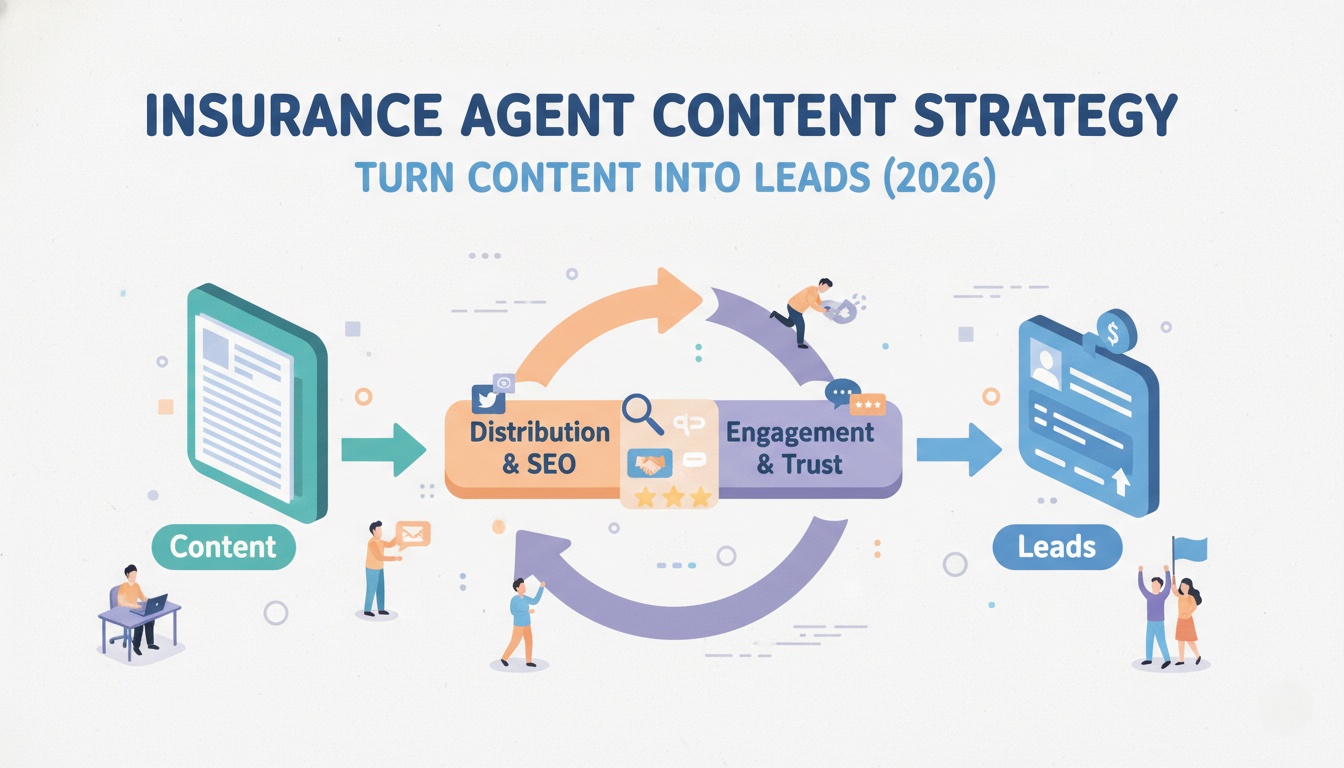 A curated list of 200+ insurance keywords organized by type and buyer intent to help agents target the right searches and drive qualified leads.
Chapter 4: Local SEO for Life Insurance Agents
Most life insurance agents think local SEO only matters for auto and home insurance. That is wrong. "Life insurance agent near me" is one of the highest-intent searches you can rank for. Someone typing those words wants to talk to a real person in their community, not a national call center.
The Life Insurance GBP Optimization Checklist
Your Google Business Profile is your storefront on Google Maps. Local Search Ranking Factors, GBP signals account for 36% of local pack rankings. This is your most important asset for local SEO.
Step 1: Claim and Verify Your Profile
If you have not already, go to Google Business Profile and claim your listing. Complete video verification if required.
Step 2: Set Your Categories Correctly
| Category Type | Selection |
|---|---|
| Primary | "Life Insurance Agency" or "Insurance Agency" |
| Secondary | Add all relevant categories: "Health Insurance Agency," "Financial Planner," "Estate Planning Attorney" (if applicable) |
Expand gradually. Do not overload your profile early.
Step 3: Write a Life-Insurance-Specific Description
Use your 750 characters wisely. Start with your core value proposition: "Independent life insurance agency serving [City Name] families for [X] years. Specializing in term life, whole life, and final expense coverage."
Include specific services: term life quotes, whole life policies, final expense insurance, life insurance for seniors, mortgage protection.
Step 4: Add Photos of Your Office and Team
Profiles with photos get significantly more engagement. Add your logo, exterior shots of your office, and photos of your team. A face people recognize is a face people trust.
Step 5: Collect Life Insurance Reviews
Ask satisfied life insurance clients to leave reviews mentioning the specific product they purchased. A review that says "helped me find affordable term life coverage for my family" reinforces your relevance for those keywords.
Step 6: Use Google Posts Weekly
Post once a week about life insurance topics:
- "April is Life Insurance Awareness Month. Here is why you should review your coverage."
- "Client testimonial: How we helped a new father secure his family's future."
- "Term life vs whole life: which one is right for you? Call us to find out."
Local Landing Pages for Life Insurance
Create city-specific pages targeting "life insurance agent in [City Name]." Each page should include:
- Local landmarks or references (helps with local relevance)
- Specific information about life insurance needs in that community
- A clear call to action with your phone number
- Internal links to your main life insurance service page
Example URL structure: youragency.com/life-insurance-agent/[city-name]
Chapter 5: How AI Search Is Changing Life Insurance SEO
Something important is happening. People are asking Google fewer questions about life insurance. Instead, they are turning to AI tools like ChatGPT for estate-planning questions and life insurance-related queries.
Searches like "what are the top-rated life insurance companies" have declined by almost 74% on Google. At the same time, more specific, intent-driven queries are rising.
What does this mean for you? AI search relies on the same trust signals Google uses. Clear expertise, accurate information, real client examples, and proper schema markup help AI systems find and trust your content. If you build for Google's E-E-A-T standards, you are also building for AI search.
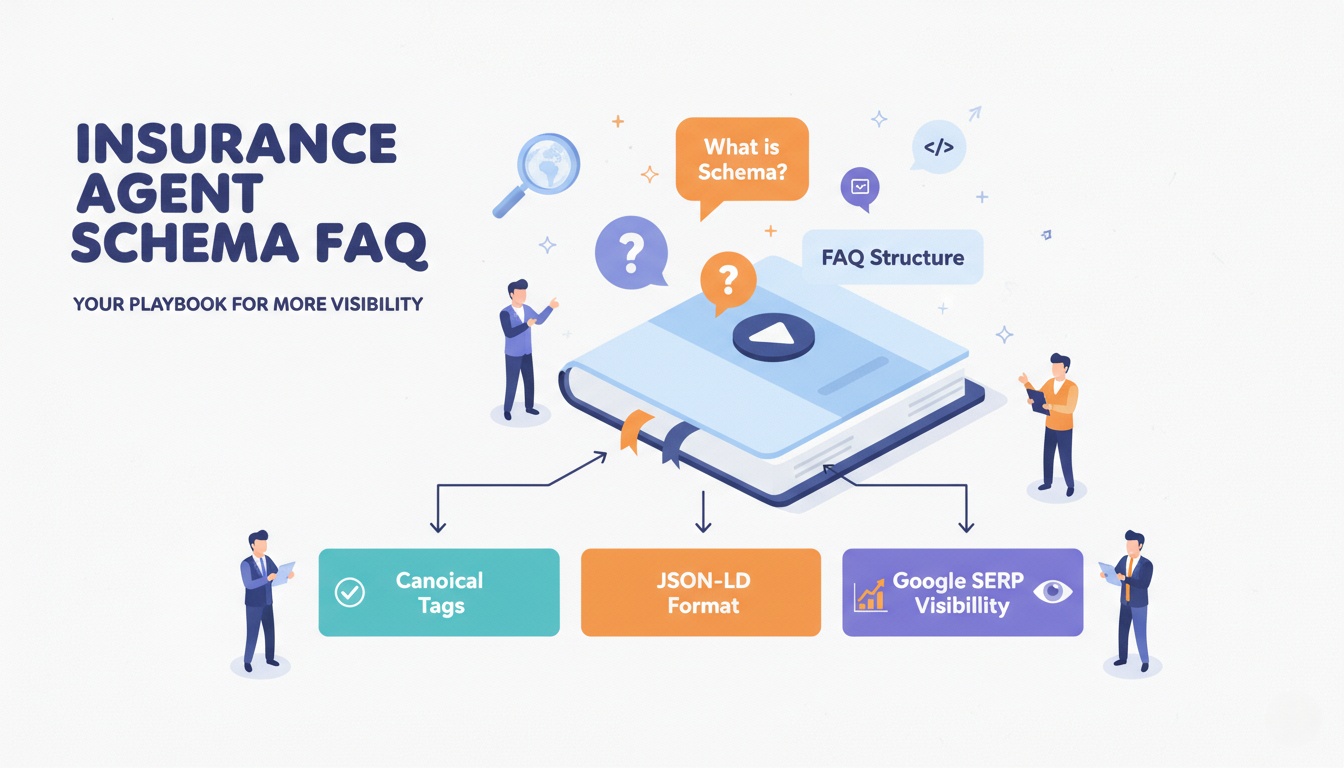 A technical playbook showing insurance agents how to implement FAQ schema markup to earn Google rich snippets and stand out in local search results.
Chapter 6: A 90-Day Life Insurance SEO Action Plan
You do not need to do everything at once. Here is a realistic schedule.
Month 1: Foundation and Keywords
Week 1:
-
Claim and optimize your Google Business Profile with life insurance categories
-
Add 5-10 life insurance keywords to your keyword tracking list
-
Check Google Search Console to see what life insurance queries already bring traffic
Week 2:
-
Create or update your main "Life Insurance" service page
-
Add 500+ words of unique, helpful content
-
Include 3-5 long-tail keywords naturally
-
Add your license number and years of experience to establish E-E-A-T
Week 3:
-
Write one life insurance blog post answering a specific client question
-
Include a real example or case study (anonymized)
-
Add internal links to your service page and pillar page
Week 4:
-
Ask 2-3 satisfied life insurance clients for Google reviews
-
Respond to every review
-
Publish one Google Post about life insurance
Month 2: Content and Local Expansion
Week 5-6:
-
Write a comparison post: "Term Life vs Whole Life for Families"
-
Create one city-specific landing page for life insurance
-
Add internal links between all life insurance content
Week 7-8:
-
Write a second blog post targeting a specific life event (new parents, retirement, etc.)
-
Reach out to one local professional (estate attorney, financial planner) about a partnership or guest post
-
Update your GBP with new life insurance photos
Month 3: Authority and Tracking
Week 9-10:
-
Write a third blog post targeting a specific demographic (seniors, business owners, etc.)
-
Add FAQ schema to your life insurance pages
-
Request re-indexing for all updated pages in Google Search Console
Week 11-12:
-
Review Google Search Console for new life insurance queries
-
Identify which keywords are bringing impressions and clicks
-
Double down on what is working
Conclusion: The Market Is Waiting for You
More people are searching for life insurance than ever before. Application activity is at record highs. And the way people search has shifted toward specific, intent-driven queries that independent agents are perfectly positioned to answer.
The agents who win in 2026 will not be the ones with the biggest marketing budgets. They will be the ones who answer the exact questions people are asking, who show up in local search results, and who build digital trust through expertise and transparency.
You already have the expertise. You already serve your community well. This guide shows you how to help Google find you so the next ready-to-buy client in your city can call you instead of a competitor.
This guide is written exclusively for independent life insurance agents and agency owners. If you are a consumer looking for a specific agent's contact information, please search for them directly on Google Maps.
Thanks for reading! ❤️
Written by
JenishRead Next

SEO for Insurance Agents: The Complete Guide

Auto Insurance SEO: 7 Proven Ways Agents Get More Leads (2026)

Local SEO in 2026: Rank #1 in Your City (Complete Checklist)
Financial Services SEO: Build Trust & Rank Higher in 2026

Insurance Agent Schema: How to Add JSON-LD Code for AI & Local Search

SEO for Accountants: Get High-Value Clients in 2026
Turn this into your AI Search strategy
LLaMaRush creates SEO, AEO, and GEO optimized content built to rank in Google and get cited by AI answer engines.
Start Ranking Everywhere