

Insurance Keywords: 200+ Search Terms That Bring Real Leads
Complete insurance keyword list for SEO. Auto, home, life, health insurance search terms with volume, buyer intent, and CPC data for 2026.


The difference between a phone that rings and a phone that stays quiet isn't luck. It's understanding what people type into Google right before they decide to call an agent.
Most agents chase the wrong keywords. They target broad terms like "life insurance" or "auto insurance quotes." Those phrases get searched millions of times. They also attract every national carrier, every comparison website, and every AI-powered aggregator with a marketing budget bigger than your entire agency's revenue.
You can't win that fight. Don't try.
Instead, win where the giants don't bother competing. Win on specific, real-world searches from people who already know they need coverage and are looking for someone local to trust.
This keyword list is organized by search intent: informational, commercial, and transactional, so you can match the right keyword to the right page on your website.
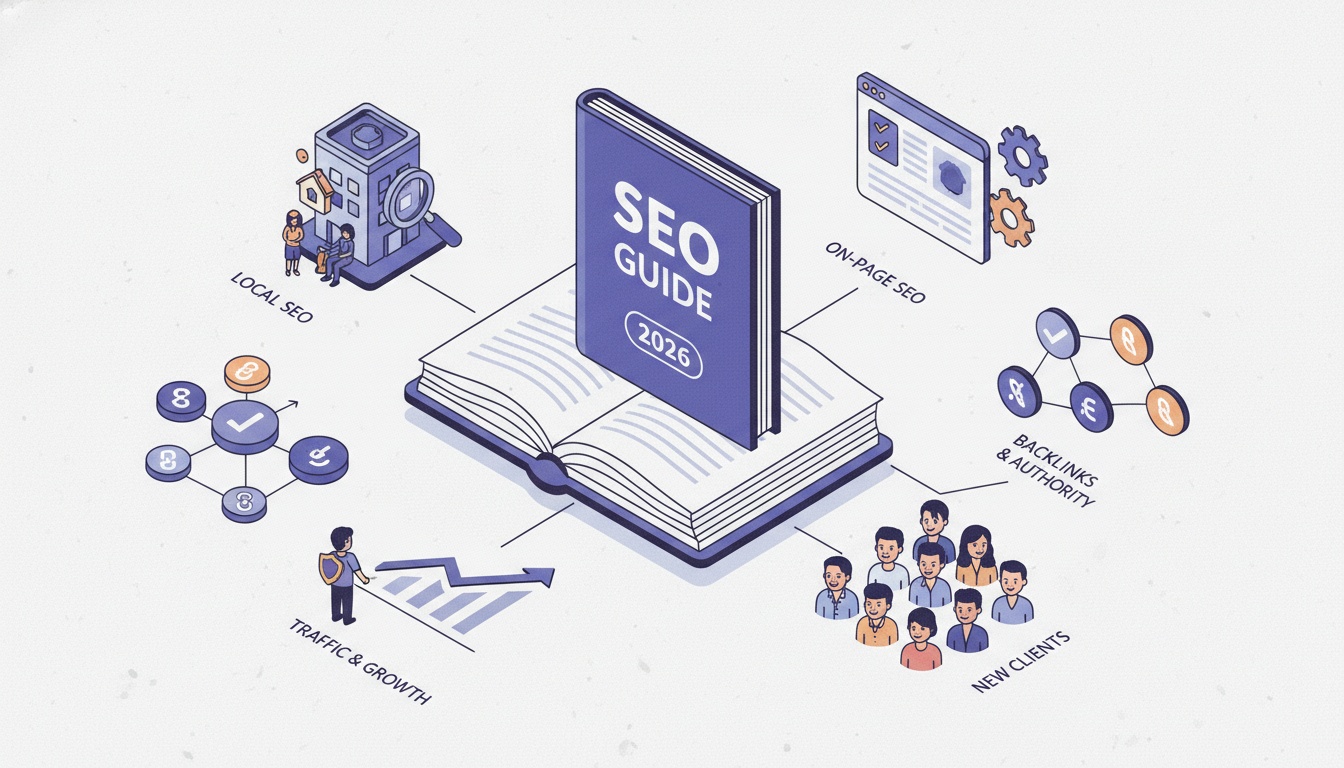 A step-by-step SEO playbook for insurance agents to attract local leads through search.
The 70% Rule You Cannot Afford to Ignore
Here is a number that changes how you should think about keywords: About 70% of all search queries are long-tail keywords. Not short, competitive head terms. Long, specific phrases that real people type when they have a real problem.
Consider this: "How much life insurance does a 30-year-old need with two kids?" That search has lower volume than "life insurance quotes." But the person typing it is not comparison shopping for fun. They are a parent who just had a sleepless night worrying about their family's future. They are ready to talk to someone.
In 2025, auto insurance searches rose 38% compared to 2024, while home insurance searches jumped 45%. Business insurance searches increased 89%, the largest growth across all insurance categories. These numbers mean one thing: people are actively searching for coverage right now. They are just using very specific phrases to do it.
These specific searches convert at much higher rates because the decision is already made. The person just needs an agent they can trust.
Chapter 1: Stop Targeting "Car Insurance." Target This Instead.
Broad keywords are a trap. Here is what actual clients search for at different stages of their decision journey:
Auto Insurance Keywords That Bring Ready-to-Buy Clients
| Intent Stage | Keyword Example | What the Searcher Wants |
|---|---|---|
| Informational | "what is liability car insurance coverage" | Understands options, not ready to buy |
| Commercial | "best car insurance for new drivers under 25" | Comparing options, close to decision |
| Transactional | "cheap auto insurance after DUI in [city]" | Ready to buy right now |
A "cheap auto insurance after DUI in [city]" search comes from someone who needs coverage immediately. They aren't researching what insurance means. They need an agent who handles high-risk drivers in their specific area. If your page answers that exact situation, you get the call.
Home Insurance Keywords That Actually Convert
| Intent Stage | Keyword Example | What the Searcher Wants |
|---|---|---|
| Informational | "does home insurance cover mold damage" | Answers a specific question |
| Commercial | "best home insurance for older homes" | Comparing carriers and agents |
| Transactional | "home insurance agent near me for [neighborhood]" | Ready to buy, looking for local agent |
Life Insurance Keywords for Serious Buyers
| Intent Stage | Keyword Example | What the Searcher Wants |
|---|---|---|
| Informational | "term vs whole life insurance for families" | Understands options |
| Commercial | "best life insurance for diabetics over 50" | Has a specific need, comparing |
| Transactional | "life insurance agent near me for parents" | Ready to protect their family now |
Commercial Insurance Keywords for Business Owners
| Intent Stage | Keyword Example | What the Searcher Wants |
|---|---|---|
| Informational | "what does general liability insurance cover" | Learning about requirements |
| Commercial | "commercial insurance broker for contractors" | Actively looking for an agent |
| Transactional | "business insurance broker in [city]" | Ready to purchase |
The pattern is clear: specific problem + specific location + specific audience = phone call.
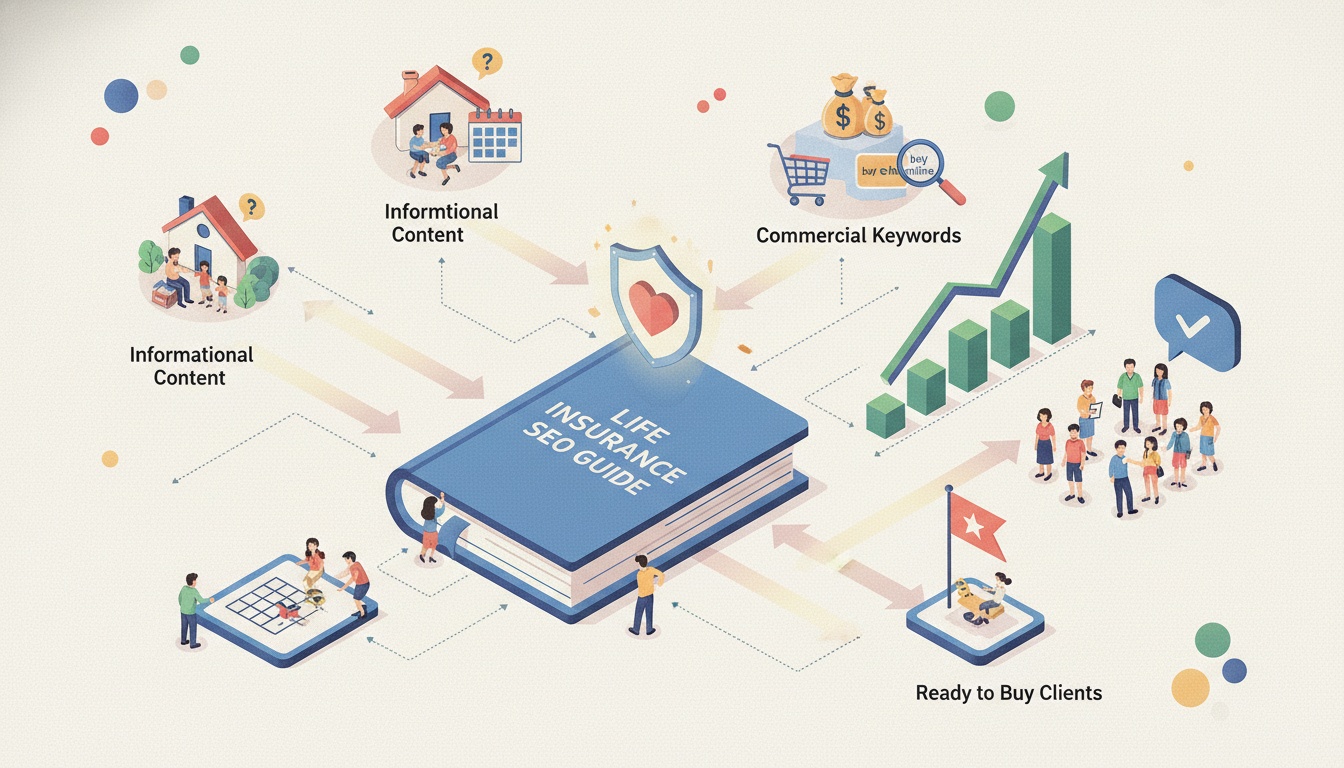 An SEO framework for life insurance agents to attract serious buyers, not just traffic through smarter keywords, trust-building content, and conversion-focused design.
Chapter 2: How to Find Your Own Goldmine Keywords
You do not need expensive software to find keywords that convert. The best source is already in your office.
Listen to Your Current Clients
Every question a client asks you is a potential keyword. When someone calls and says, "I just bought a house and need to insure it," that is a keyword: "home insurance for new homeowners." When a business owner asks, "Do I need separate coverage for my work truck?" that is a keyword: "commercial auto insurance for work trucks."
Write down every question you hear for one week. These are not just questions. They are search terms people are typing into Google.
Use Free Tools to Expand Your List
| Tool | Best For | Cost |
|---|---|---|
| Google Keyword Planner | Finding search volume for specific terms | Free with Google Ads account |
| Google Search Console | Seeing what people already search to find your site | Free |
| AnswerThePublic | Finding question-based keywords (how, what, why, when) | Free version available |
| Ubersuggest | Getting keyword ideas and competition level | Free tier available |
Start with Google Search Console. It tells you exactly what people typed before landing on your website. If someone found your agency through "commercial insurance broker [city]," you already rank for that phrase. Now optimize that page to rank even higher.
Spy on Your Competitors (The Right Way)
Look at the websites of the three agencies that consistently show up above you in search results. What phrases do they use in their page titles? What questions do they answer in their blog posts? You are not copying them. You are identifying gaps they missed, questions they did not answer, locations they did not target, specific situations they did not address.
Chapter 3: The Complete Insurance Keyword Database
Below is a structured list of over 200 keywords organized by insurance type and search intent. Use this as your starting point.
Auto Insurance Long-Tail Keywords
| Keyword | Intent | Competition | Suggested Page |
|---|---|---|---|
| cheap auto insurance for new drivers | Transactional | Medium | Service page |
| best car insurance for seniors over 65 | Commercial | Low | Blog post |
| non-owner SR-22 insurance [state] | Transactional | Low | Service page |
| commercial auto insurance for delivery drivers | Commercial | Low | Service page |
| what happens if you drive without insurance [state] | Informational | Medium | FAQ page |
| car insurance after license suspension | Transactional | Medium | Service page |
| temporary car insurance for rental cars | Commercial | Low | Blog post |
| gap insurance for leased vehicles | Informational | Medium | FAQ page |
Home Insurance Long-Tail Keywords
| Keyword | Intent | Competition | Suggested Page |
|---|---|---|---|
| home insurance for older homes [city] | Transactional | Low | Location page |
| does home insurance cover roof replacement | Informational | High | FAQ page |
| landlord insurance for rental properties | Commercial | Medium | Service page |
| flood insurance vs home insurance explained | Informational | Medium | Comparison page |
| best home insurance for first-time buyers | Commercial | Medium | Blog post |
| home insurance claim process step by step | Informational | Low | Guide page |
| condo insurance vs homeowners insurance | Informational | Medium | Comparison page |
| vacant home insurance for renovation | Transactional | Low | Service page |
Life Insurance Long-Tail Keywords
| Keyword | Intent | Competition | Suggested Page |
|---|---|---|---|
| term life insurance for new parents | Commercial | Medium | Blog post |
| life insurance for diabetics type 2 | Transactional | Low | Service page |
| whole life insurance vs term for retirement | Commercial | Medium | Comparison page |
| final expense insurance for seniors over 75 | Transactional | Low | Service page |
| life insurance for stay-at-home parents | Commercial | Low | Blog post |
| guaranteed issue life insurance no medical exam | Transactional | High | Service page |
| life insurance for smokers over 50 | Commercial | Medium | Blog post |
| how much life insurance do I need calculator | Transactional | High | Tool page |
Health Insurance Long-Tail Keywords
| Keyword | Intent | Competition | Suggested Page |
|---|---|---|---|
| Medicare Advantage plans that cover dental | Transactional | High | Service page |
| health insurance for self-employed contractors | Commercial | Medium | Blog post |
| short-term health insurance between jobs | Transactional | Medium | Service page |
| does Medicaid cover vision and dental | Informational | Medium | FAQ page |
| best health insurance for freelancers [city] | Commercial | Medium | Location page |
| COBRA insurance vs marketplace plans | Informational | Medium | Comparison page |
| health insurance for small business owners | Commercial | High | Service page |
| Affordable Care Act enrollment deadlines 2026 | Informational | High | Blog post |
Commercial Insurance Long-Tail Keywords
| Keyword | Intent | Competition | Suggested Page |
|---|---|---|---|
| general liability insurance for contractors | Commercial | High | Service page |
| business interruption insurance for restaurants | Commercial | Low | Industry page |
| workers comp insurance for small business [state] | Transactional | Medium | Service page |
| professional liability insurance for consultants | Commercial | Medium | Service page |
| cyber liability insurance for small business | Commercial | Medium | Blog post |
| commercial umbrella insurance explained | Informational | Low | FAQ page |
| E&O insurance for real estate agents | Transactional | Medium | Service page |
| business owners policy vs separate coverage | Commercial | Medium | Comparison page |
Location-Based Keywords (Local SEO)
| Keyword Type | Example | Suggested Page |
|---|---|---|
| City + service | "home insurance agent in [city name]" | Location landing page |
| Neighborhood + service | "auto insurance near [neighborhood name]" | Location landing page |
| State + insurance type | "[state] life insurance requirements" | State resource page |
| "Near me" searches | "commercial insurance broker near me" | Homepage + GBP optimization |
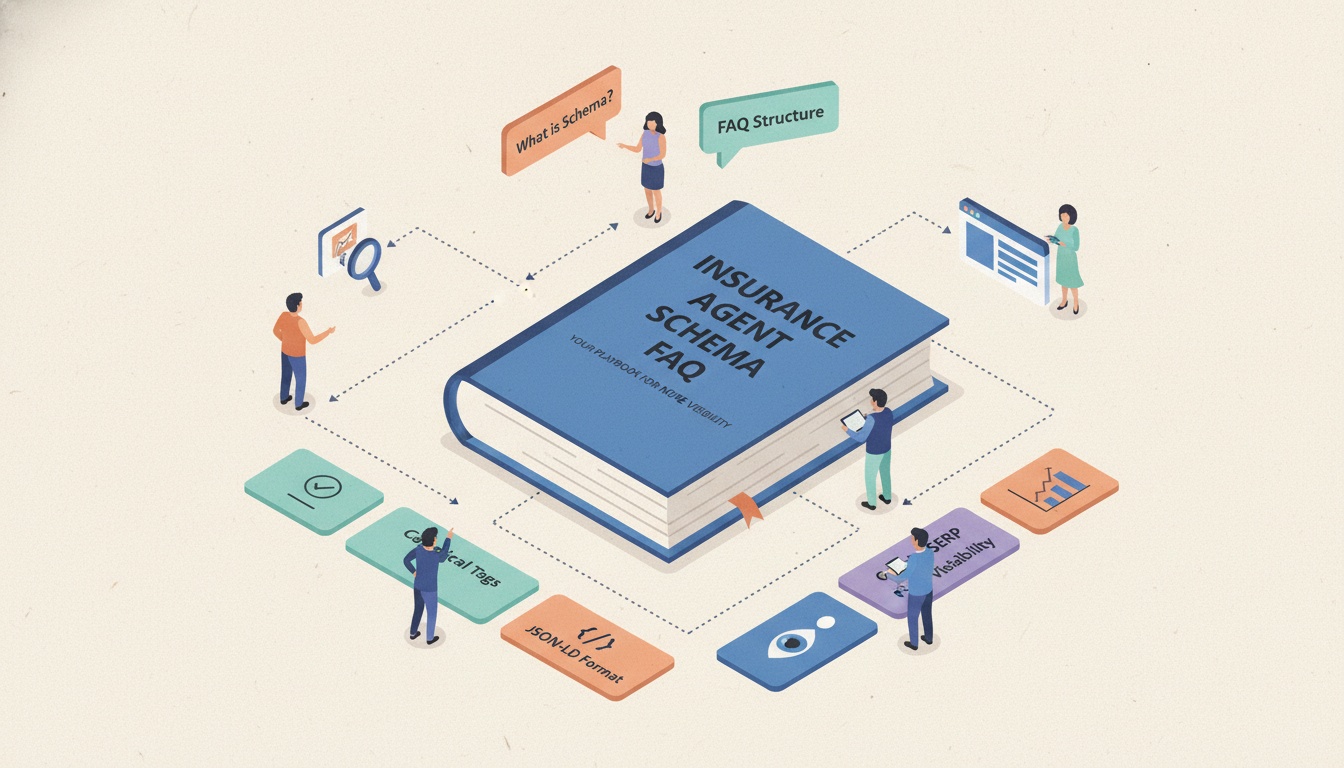 A technical guide showing insurance agents how to use FAQ and LocalBusiness schema markup to win Google rich snippets and capture more local leads.
Chapter 4: Where to Put Your Keywords (So Google Actually Notices)
Finding the right keywords is only half the work. You have to place them where Google looks first.
Your Homepage
Your homepage should target your agency's primary service areas and insurance types. Not every keyword. Just the three to five most important phrases that describe what you do and where you do it.
Example: "Independent insurance agency serving [city name] with auto, home, and commercial coverage."
Your Service Pages
Create dedicated pages for each insurance type you offer. Then optimize each page for related long-tail keywords.
| Page Type | Target Keywords |
|---|---|
| Auto insurance page | "cheap auto insurance [city]", "car insurance for new drivers [city]" |
| Home insurance page | "home insurance [city]", "home insurance for older homes [neighborhood]" |
| Life insurance page | "life insurance agent [city]", "term life insurance for parents [city]" |
Your Location Pages
Create a separate page for each city or neighborhood you serve. Each page targets "[insurance type] [location name]" searches.
Do not create duplicate pages with just the city name changed. Write unique content for each location. Mention local landmarks, local regulations, and local client examples.
Your Blog Posts
Your blog exists to capture informational and commercial intent keywords, the people who are researching before they buy. Each blog post should target one primary keyword and two to three related secondary keywords.
Example blog structure:
- Title: "Term Life Insurance for New Parents: How Much Do You Actually Need?"
- Primary keyword: "term life insurance for new parents"
- Secondary keywords: "how much life insurance for new parents", "life insurance after having a baby"
Your FAQ Page
FAQ pages naturally rank for question-based keywords. Each question in your FAQ should be a real question people ask, formatted as an H2 or H3 heading.
Example:
- H2: "Does home insurance cover mold damage in [state]?"
- Answer: "In [state], home insurance typically covers mold only if it results from a covered peril, such as burst pipes. Gradual damage from humidity is generally excluded."
Chapter 5: The 30-Day Keyword Implementation Plan
You do not need to optimize everything at once. Here is a realistic schedule.
Week 1: Audit and Prioritize
-
Log into Google Search Console
-
Go to Performance → Queries
-
Export your top 50 keywords by impressions
-
Identify which keywords already bring traffic and which have zero clicks
-
Pick 10 keywords from your existing list that match your services
Week 2: Optimize Existing Pages
-
Update your homepage title tag and meta description with your primary keyword
-
Optimize your main service pages (auto, home, life, commercial) with 3-5 long-tail keywords each
-
Add internal links between related service pages
-
Submit updated pages for re-indexing in Google Search Console
Week 3: Create One New Page
-
Pick one location you serve that does not have a dedicated page
-
Write a 500+ word page targeting "[insurance type] [location]"
-
Include a unique local detail (landmark, regulation, local event)
-
Add a clear call to action (phone number or contact form)
Week 4: Write One Blog Post
-
Pick one commercial intent keyword from the database above
-
Write a 1,000+ word post answering the searcher's real question
-
Include a specific example or case study
-
Link from your blog post to the relevant service page
-
Request indexing
Chapter 6: Three Keyword Mistakes That Kill Your Rankings
Even great keywords will not help if you use them the wrong way.
Mistake 1: Keyword Stuffing
Ten years ago, repeating "auto insurance agent auto insurance agent auto insurance agent" might have worked. Today, Google penalizes pages that force keywords where they do not belong naturally.
Fix: Write for humans first. Use your keyword in the title, one H2 heading, and 2-3 times in the body. If it sounds awkward to read aloud, rewrite it.
Mistake 2: Ignoring Search Intent
Ranking for "what is term life insurance" will not bring you sales calls. That searcher wants an education, not a quote. They will click your page, read the definition, and leave without ever contacting you.
Fix: Match your content to the keyword's intent. Informational keywords go to blog posts. Commercial and transactional keywords go to service pages with phone numbers and quote forms.
Mistake 3: Forgetting Local Modifiers
"Insurance agent" has millions of competitors. "Insurance agent in [city name]" has far fewer. Adding your city, neighborhood, or region to your keywords immediately reduces competition and increases relevance.
Fix: Add your location to every page title where it makes sense. "Auto Insurance Agent in [City Name]" will outrank "Auto Insurance Agent" every time for local searches.
Chapter 7: Measuring What Matters
Vanity metrics will not pay your bills. Here is what to actually track.
Weekly Check (5 Minutes)
| Metric | Where to Find It | What It Tells You |
|---|---|---|
| New keywords appearing in Search Console | GSC → Queries, filter by "Position improved" | Your content is gaining visibility for new terms |
| Clicks from your top 10 keywords | GSC → Queries, sort by clicks | Which keywords actually drive traffic |
Monthly Check (15 Minutes)
| Metric | Where to Find It | What It Tells You |
|---|---|---|
| Keyword ranking changes | GSC → Queries, compare to previous month | Whether your optimizations are working |
| Pages with highest impressions | GSC → Pages | Which content is attracting attention |
| CTR for your service pages | GSC → Pages → filter by service pages | Whether your titles and descriptions need updating |
The Only Metric That Ultimately Matters
All the keyword rankings in the world do not matter if your phone does not ring. Track where every new client came from. Ask every caller, "How did you hear about us?"
When you hear "I found you on Google," you know your keyword strategy is working.
Conclusion: One Keyword. One Page. One Call.
You do not need to rank for 200 keywords to grow your agency. You need to rank for the right five to ten keywords that bring ready-to-buy clients in your specific area.
Pick one keyword from the database above that matches a service you offer and a location you serve. Create one page that answers exactly what that person is searching for. Add your phone number prominently.
Then wait.
Within 30 days, you will likely see that page climbing in search results. And eventually, someone will call because you were the only agent who answered their specific question.
That is how independent agents outrank national carriers. Not with bigger budgets. With better answers to real questions.
This keyword guide is written exclusively for independent insurance agents and agency owners. If you are a consumer looking for a specific agent's contact information, please search for them directly on Google Maps.
Thanks for reading! ❤️
Written by
JenishRead Next

SEO for Insurance Agents: The Complete Guide

Insurance Agent Content Strategy: Turn Content Into Leads (2026)

Insurance Agent Schema: How to Add JSON-LD Code for AI & Local Search
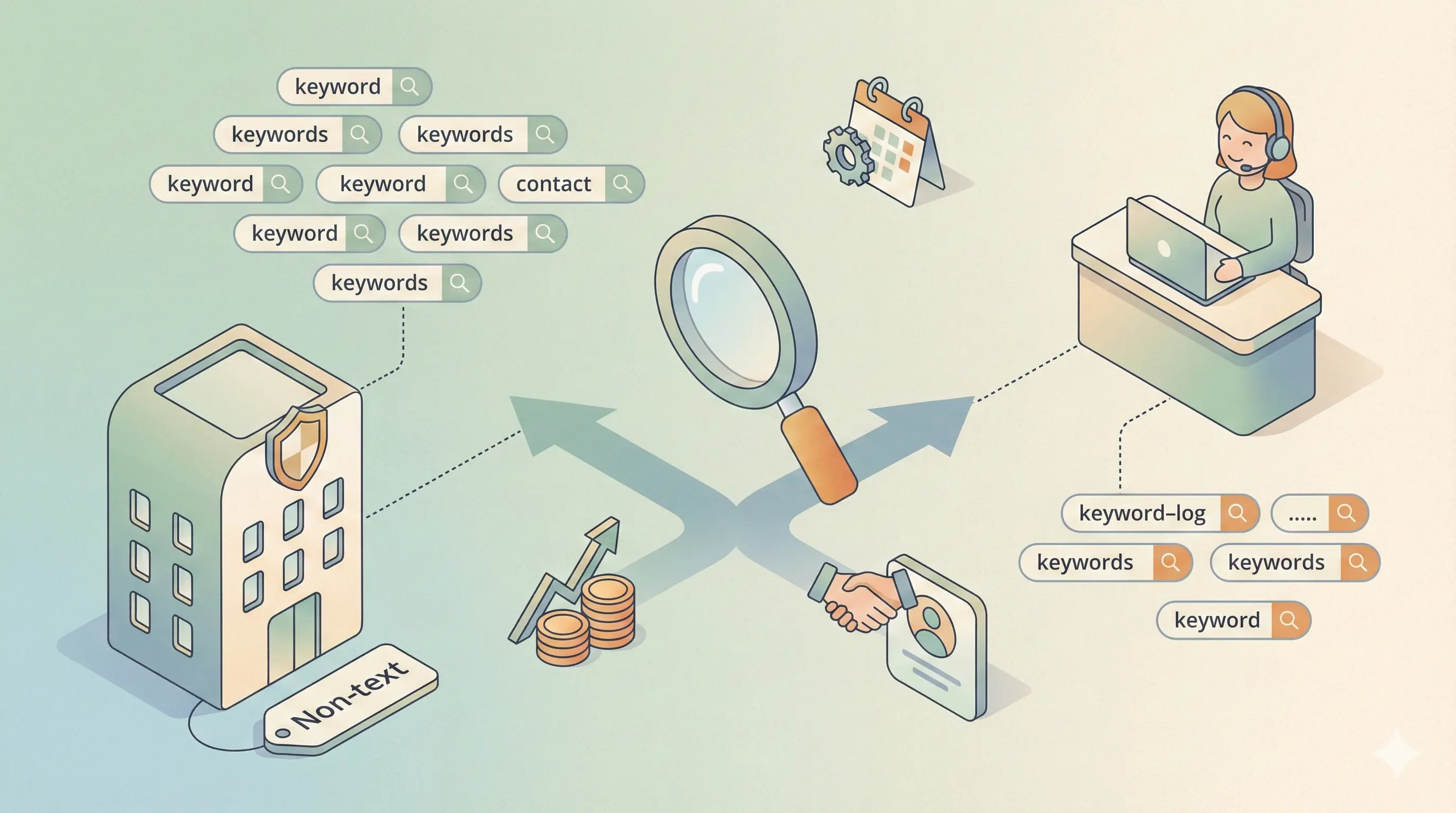
Insurance Broker vs Agent SEO: Which Keywords to Target (2026)

Life Insurance SEO: Turn Ready-to-Buy Searchers Into Clients

Auto Insurance SEO: 7 Proven Ways Agents Get More Leads (2026)
Turn this into your AI Search strategy
LLaMaRush creates SEO, AEO, and GEO optimized content built to rank in Google and get cited by AI answer engines.
Start Ranking Everywhere